Sinai Family's Move to Bombay
Midnight's ChildrenThe Sinai family’s move from Delhi to Bombay follows a fire that destroys the godown and changes Ahmed Sinai’s sense of what future is possible. On June 4, Amina and Ahmed leave for Bombay aboard the Frontier Mail on the same day Mountbatten announces Partition and begins the countdown to the transfer of power. The journey is at once a business pivot, a family rupture, and a step toward the city where Saleem will be born.
Causes and Decision
The immediate cause is the burning of the godown. In the heat of the fire, Ahmed decides to leave the leathercloth trade, sell its office and goodwill, and abandon what he knows of the business. He also rejects the Pakistan project associated with Emerald’s husband, Zulfikar. Instead, he proposes entering Bombay’s property market, where property is temporarily cheap, and says that Narlikar knows the opportunity.
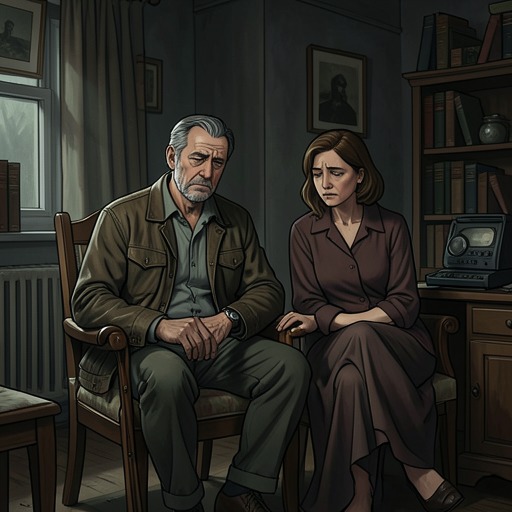
Ahmed’s decision comes amid the wreckage of the fire and the family’s exposure to its consequences: the insurance money will arrive, but the old business is over. The move is therefore not presented as a calm, long-planned relocation. In Saleem’s account, the family goes when it is pushed. The fire is one more shove in a family history shaped by departures, and this time the shove sends Ahmed, Amina, and their unborn child toward Bombay.
Departure and the Road
On June 4, the ill-matched couple leave Delhi on the Frontier Mail. Their departure coincides with Mountbatten’s public announcement of Partition and the beginning of the seventy-day countdown. The family’s private journey and the political timetable start together: as the train carries them toward a new city, the country moves toward the transfer of power.
The train is also a recurring threshold in the novel. As it pulls out, Ahmed bolts the compartment door and lowers the shutters against people outside pleading to be let in. He dismisses them as fare-dodgers, but Saleem retrospectively sees them as a prophecy. Later, he will occupy the other side of that closed door, clinging to the train and begging to be admitted. The move thus establishes a pattern in which the family’s apparent security and the exposed traveler’s vulnerability exchange places.
The journey carries a small, charged remnant of the old household: a forbidden, lapis-lazuli-encrusted silver spittoon hidden beneath the dowry in a green tin trunk. As Amina leaves her father behind, she sits with her feet on the trunk, described as the locked museum of his achievements. The household object travels with her, joining inherited family history to the uncertain life ahead.
Bombay, Exile, and Recurrence
Saleem frames the move as part of a larger chain of displacements. His grandfather is driven from Kashmir; Mercurochrome drives him out of Amritsar; his mother leaves Agra after her life collapses beneath the carpets; and the many-headed monsters send Ahmed to Bombay. These departures are not identical, but together they make movement under pressure a family pattern—and bring history to the point at which Saleem can enter it.
Bombay becomes both a destination and a beginning. The novel’s later journeys return to the city from different directions: Saleem first experiences India’s wider world through the mental viewpoints he visits from the clocktower, and, after years of exile, makes his way back toward Delhi by train, repeating the earlier image of a traveler pleading outside a closed compartment. The family’s move is therefore more than a change of address. Its railway departure initiates a recurring structure of passage, exclusion, and return, while placing Saleem’s birth within the larger upheaval of Partition.